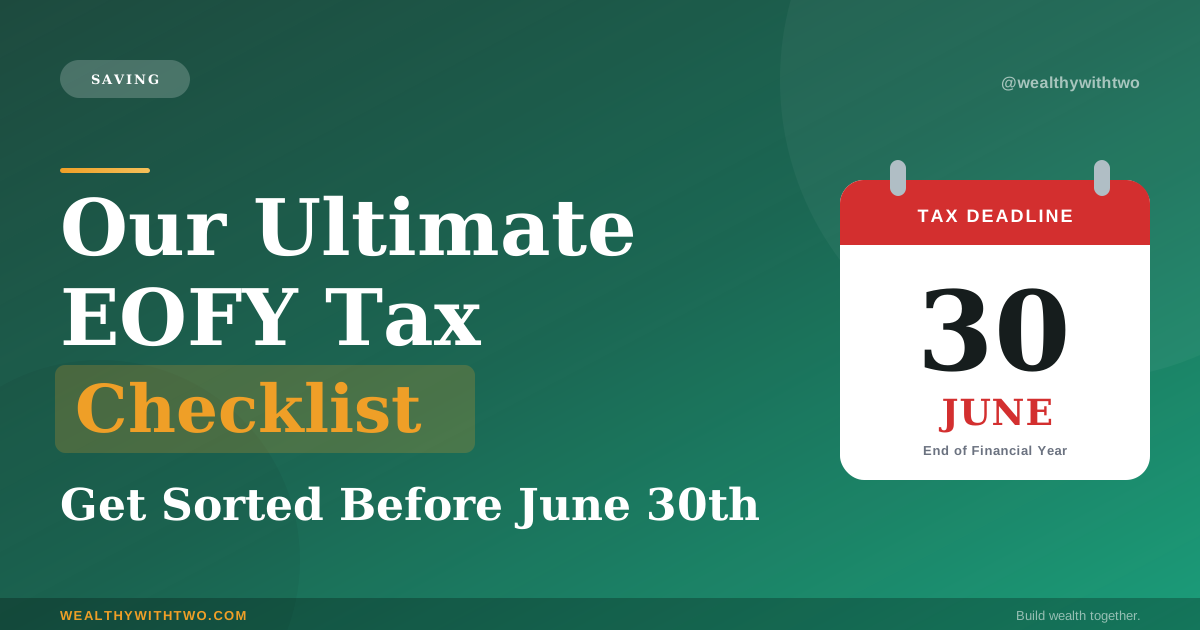
Our Ultimate End of Financial Year (EOFY) Tax Checklist

Mukul & Priyanka
Founders, WealthyWithTwo
The Annual Scramble Doesn't Have to Be Chaotic
It happens every single year. You look at the calendar, realize it’s June, and suddenly the End of Financial Year (EOFY) is staring you in the face. If you aren't prepared, tax time can feel like a chaotic, mad scramble. But it doesn't have to be.
We also put together a quick video breakdown of this checklist. You can watch it directly below or on our YouTube Channel to help you visualize these steps as you prepare your tax return.
1. Review Expenses & Maintain a Digital Paper Trail
The secret to a stress-free tax season is organization. We keep a dedicated Google Sheet to log every single deductible expense throughout the financial year. To make lodgement seamless, we include direct links to the digital invoices or receipts right next to each line item.
Here is a breakdown of what we track:
| Expense Category | What We Track | Examples & Notes |
|---|---|---|
| Work From Home (WFH) | Running costs incurred while working remotely. | Phone bills, internet usage, and office stationery. |
| Work Subscriptions | Software and professional tools needed for employment. | Professional memberships, specialized software licenses. |
| Investment Subscriptions | Tools used to manage income-producing assets. | Sharesight subscription, portfolio management costs. |
| Charitable Donations | Gifts given to recognized organizations. | Any donation over $2 made to a Deductible Gift Recipient (DGR). |
2. Our Strategic Superannuation Philosophy
Many standard financial checklists tell you to blindly maximize your superannuation contributions cap every year. But let's be realistic: maxing it out isn't always achievable or ideal for everyone's immediate cash flow and investment goals. We don't actually maximize our super contributions right now.
Instead, we use a targeted strategy: we make voluntary contributions specifically to cover our insurance costs and super fees.
Between income protection, life insurance premiums, and fund administration fees, your super balance can face some serious drag every year. By calculating what those fees cost us annually and making an after-tax voluntary contribution to match them, we protect our core super balance. It allows our main nest egg to compound cleanly without being eaten away, and we still get to claim a neat tax deduction on that offset amount!
Critical Rules for Voluntary Contributions
If you use this strategy, there are two critical rules you must follow before June 30th:
- Clear the Cutoff Date: Don't wait until June 30th to transfer the cash. Your super fund must actually receive the money by their processing deadline for it to count toward the current financial year.
- Submit a Notice of Intent: You must formally notify your super fund that you intend to claim a tax deduction for your voluntary personal contribution. Fill out a Notice of Intent to Claim a Deduction form, submit it to your fund, and make sure you receive their official acknowledgment before you lodge your tax return.
[!IMPORTANT] Don't Forget the Notice of Intent If you make voluntary contributions to your super and want to claim them as a tax deduction, the ATO will reject your claim if you haven't submitted the Notice of Intent to your super fund and received their confirmation receipt. Make this your top priority before filing!
3. Track Your Portfolio with Sharesight
Tracking buy/sell transactions, dividend payouts, and franking credits manually is an absolute nightmare. That’s why we use Sharesight to keep track of our entire investment portfolio automatically.
Before EOFY, we log into Sharesight to ensure:
- All brokerage accounts are synced and recent trades are updated.
- All dividend distributions and dividend reinvestment plans (DRPs) throughout the year are accurately captured.
- We generate EOFY taxable income and capital gains reports with a single click, saving us hours of manual calculator work.
4. Calculate Work From Home (WFH) Hours
If you’ve spent a portion of the year working remotely, it’s time to tally up your hours. Ensure you have a log, diary, or timesheet reflecting the exact hours you worked from home. You can then use the ATO's fixed-rate method (67 cents per hour) or the actual cost method to claim your deduction accurately.
5. Double-Check Deductible Donations
Go back through your bank statements and your expense Google Sheet to ensure no charitable donations were missed. As long as the charity has DGR status and you didn't receive a material benefit in return (like a raffle ticket), you can claim it to help lower your taxable income.
6. Retrieve Private Health Insurance Statements
While most health funds report your details directly to the ATO (meaning it will pre-fill in your myTax portal), double-checking your statement helps ensure you are correctly exempt from the Medicare Levy Surcharge (MLS) if your income falls above the thresholds.
Conclusion: Save, Share, and Get Ready!
Don't let June 30th catch you off guard. Take an hour this week to check off these items, update your spreadsheets, and get your portfolio in order.
If you found this guide helpful, make sure to save it, share it with someone who needs a tax-time reminder, and follow us for more saving hacks and financial tips!
Written by Mukul & Priyanka
We moved to Sydney as international students in 2019 and navigated the Australian financial system firsthand. Today, we share the exact strategies we used to build wealth, buy our first home, and achieve financial security as a migrant couple.
Read our full story →