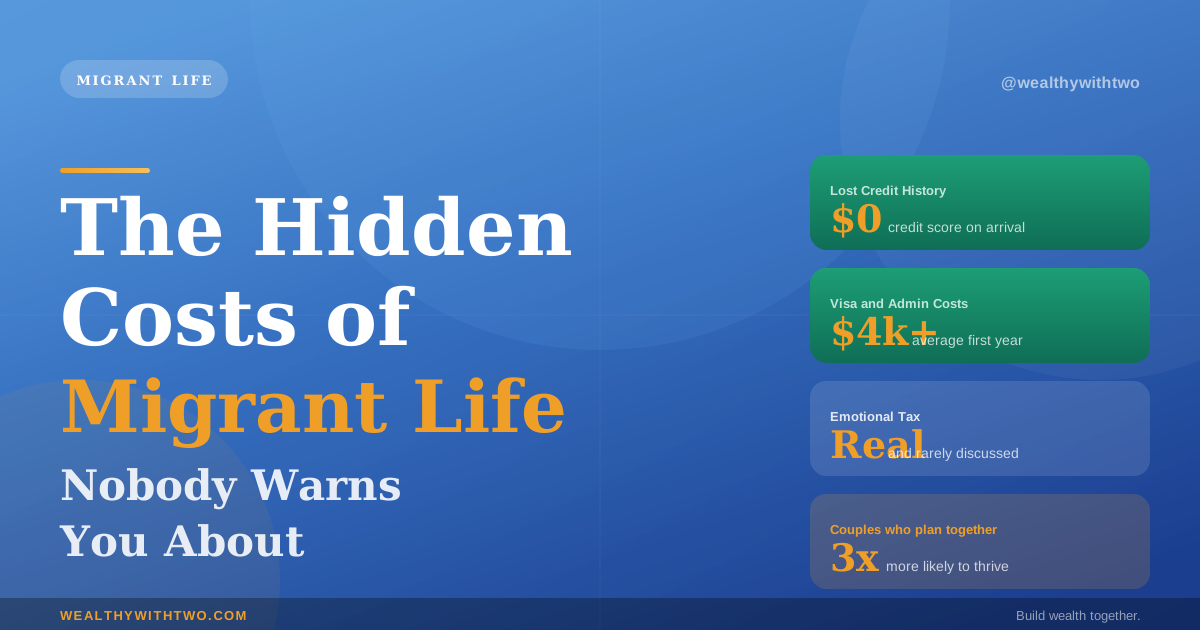
The Hidden Costs of Migrant Life Nobody Warns You About

Mukul & Priyanka
Founders, WealthyWithTwo
The Real Price of Starting Over
When you decide to move to Australia, you budget for the big things: the visa application fees, the flights, shipping your belongings, and enough savings to survive while you look for a job.
But after the initial excitement fades, the reality of the hidden costs of being a migrant starts to set in. These are the expenses that no one mentions on the immigration forums, but they can take a significant toll on your finances if you aren't prepared.
1. The 'No Credit History' Tax
It doesn't matter if you had a perfect credit score in your home country; when you arrive in Australia, you are a ghost to the financial system. This lack of credit history affects more than just getting a credit card.
The Impact: You might struggle to get approved for a rental property, leading to paying months of rent upfront. You'll likely face higher interest rates if you need to finance a car. Even mobile phone contracts can require larger deposits.
The Strategy: Start building your Australian credit profile immediately. Put utility bills in your name, pay them on time, and consider a low-limit credit card that you pay off in full every month.
2. The Foreign Exchange Bleed
If you're still receiving income from your home country, paying off debts back home, or regularly sending money to family, currency fluctuations and transfer fees are silently eating away at your wealth.
The Impact: Using traditional banks for international transfers often means poor exchange rates and hidden fees.
The Strategy: Use dedicated currency transfer services (like Wise or Revolut) instead of your bank. If you have significant obligations in another currency, try to build a buffer so you aren't forced to transfer money when the exchange rate is unfavorable.
3. Professional Downgrading
Many migrants arrive with impressive qualifications and years of experience, only to find that Australian employers want "local experience."
The Impact: You may have to take a role that is junior to what you were doing previously, resulting in a lower salary than you anticipated. You might also need to pay for bridging courses, local certifications, or registration with Australian professional bodies.
The Strategy: Research your industry's specific requirements before you arrive. Budget for professional re-certification and mentally prepare for a temporary dip in income while you establish your local network.
4. The Cost of Distance
Living far away from your support network isn't just emotionally taxing; it's expensive.
The Impact: You don't have family nearby to help with free childcare. When you move houses, you have to hire movers instead of bribing friends with pizza. And then there are the emergency flights home: weddings, funerals, or illnesses don't wait for flight sales.
The Strategy: Your emergency fund needs to be larger than a local's. Factor in the cost of two return flights to your home country at peak pricing as an absolute minimum baseline for your emergency savings.
5. Visa Renewals and Pathways to PR
If you didn't arrive on a Permanent Resident (PR) visa, the journey to getting one is often long, stressful, and incredibly expensive.
The Impact: Migration agents, English language tests, skills assessments, police checks, medical examinations, and the visa application fees themselves often run into the tens of thousands of dollars.
The Strategy: Treat your PR pathway like a major financial goal (like buying a house). Map out the estimated costs over the next few years and set up a dedicated sinking fund just for visa-related expenses.
Being a migrant is an incredible opportunity, but it requires financial resilience. By acknowledging these hidden costs, you can plan for them, rather than letting them derail your journey to building wealth in your new home.
Written by Mukul & Priyanka
We moved to Sydney as international students in 2019 and navigated the Australian financial system firsthand. Today, we share the exact strategies we used to build wealth, buy our first home, and achieve financial security as a migrant couple.
Read our full story →